Electrical safety after wind, fire or water damage
The hardest part of a damaged building is knowing what not to touch, and electricity is at the top of that list.
October 7, 2026 · 3 min read
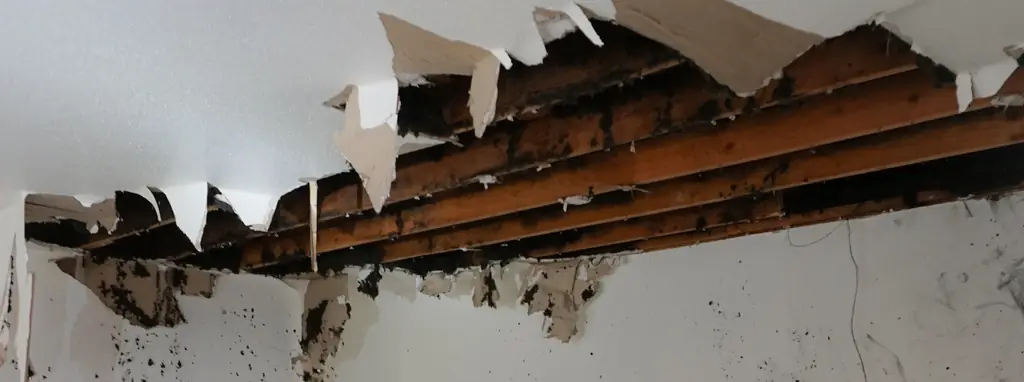
Central Washington gives electrical systems plenty of ways to fail. Summer brings wildfire smoke and the occasional house fire. Fall and winter bring wind storms that drop limbs on service lines. Cold snaps freeze pipes, and a burst pipe above a ceiling can send water through light fixtures and down the walls. When any of those happen, the first instinct is to get things back to normal. With electricity, the safest move often looks like doing less.
The first minutes
If you smell burning, see sparks, or the building is on fire, get everyone out and call 911 before you call anyone else. A downed line outside is a job for your utility, not for you or for us. Stay well back from it, keep children and pets away, and treat anything that touches it, including a fence or a puddle, as energized.
If the situation is stable but you are worried, find out whether the power is still on. Do this only if you can reach the main breaker without stepping in water and without touching anything wet. If the panel itself is wet, scorched, or you can’t reach it dry, stay away and call for help. Guessing is the one habit that hurts people in this situation.
After water
Water and electricity are a poor mix at every level of the system. Do not walk into standing water in a room with outlets, appliances, or a panel, even if you believe the power is off. Do not flip breakers while wet, and do not plug anything into a wet outlet. Wiring that has been soaked can look fine and still be unsafe, because moisture gets inside outlet boxes, connections, and devices where you can’t see it.
Items that were submerged, such as receptacles, switches, breakers, and appliance controls, are often replaced rather than dried out. An electrician can inspect what is left and tell you which parts can stay. Your insurer may have its own rules for what it needs to see before a claim moves forward, so photograph the damage before anything is changed and ask what documentation it wants.
After fire and smoke
Fire damage to wiring isn’t limited to the room that burned. Heat can weaken insulation inside walls and ceilings well beyond the visible damage, and soot is conductive enough to cause trouble in electrical equipment. A ceiling with exposed joists and charred framing, like the one in the photo above, usually means the wiring running through it needs to be inspected and often replaced. Don’t restore power to a fire-damaged building until someone qualified has looked at it, even if the lights in other rooms still work.
Smoke without much fire damage is trickier. Panels, smoke alarms, and electronics can all be affected, and a crew should check the panel and the main connections before you assume things are fine.
After wind
Wind damage is easy to underestimate because the house often looks fine from the street. A strong wind can strain the service mast and the connection where the power line meets your house. If you see a mast leaning, a meter base pulling away from the wall, or wires hanging at an angle, call the utility and an electrician. Falling trees can also damage buried or attached wiring that you can’t see from the ground. If you run a generator during an outage, keep it outdoors and away from windows, and never plug it into a wall outlet to feed the house. That can send power back down the line and hurt a lineworker. Cleanup can wait too. Before you start hauling branches off the roof or cutting a fallen limb, look up for wires, and remember that a limb resting on a service line can carry current into whatever is touching it.
When to call us
We run a 24/7 emergency electrical line at 509-388-4745. When you call, tell us what happened, if the power is still on, and if you can see damage at the panel or the wiring. We can often talk you through what to leave alone while we get there. A shop owner named Ron wrote that Alex arrived within 45 minutes of his call after four other electricians didn’t answer. That was one customer on one day, not a promise about every call, but it tells you what we aim for.
Whatever the cause, we would rather look at a panel that turns out to be fine than have you guess. Call 509-388-4745 any hour, or use the contact page for non-urgent questions.
Bigfoot Electric, 509-388-4745
Call 509-388-4745More articles
My insurer flagged my electrical panel. Now what?
A flag from your insurer feels like an emergency, but it is mostly a prompt to make a plan.
Signs your Yakima Valley home needs rewiring
Older homes hide their wiring problems well, so the clues are usually small and easy to dismiss.