My insurer flagged my electrical panel. Now what?
A flag from your insurer feels like an emergency, but it is mostly a prompt to make a plan.
October 7, 2026 · 4 min read
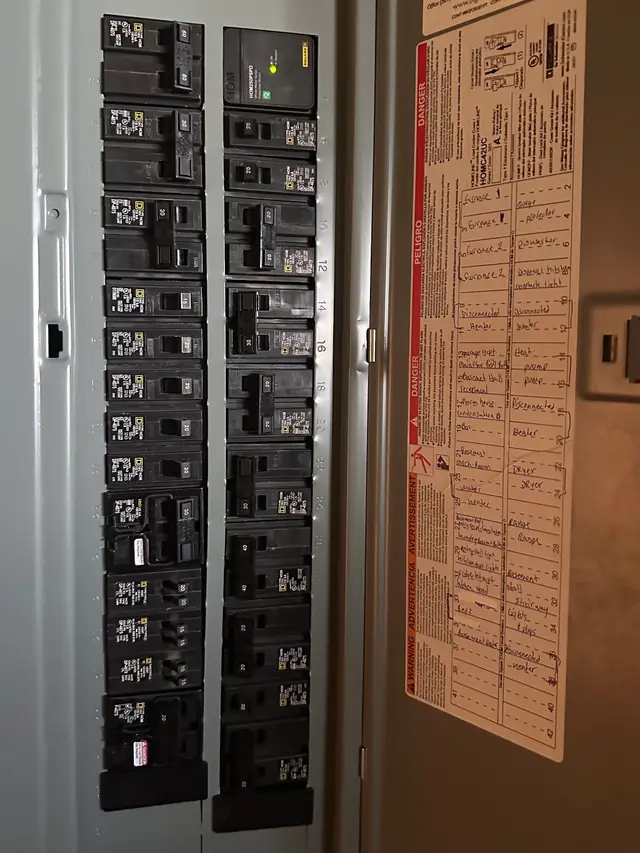
A customer of ours opened the letter most homeowners dread. Her insurance company had red-flagged the electrical panel in her house for safety concerns, and she couldn’t tell whether that meant a small fix or a very large bill. She did what we would suggest anyone do: she got two bids. Once she chose one, a three-person crew upgraded the panel in a single long day. The part worth noticing is everything that came before that day, because a flag from an insurer feels like an emergency and usually isn’t one. It is a request to make a plan.
What the flag usually points to
Insurers rarely send an electrician to look at a house. Flags tend to come from a home inspection report, an underwriting photo, or a visit at renewal time. The causes are fairly familiar to anyone in the trade. Some panel brands and models have long records of problems. Some panels show scorched or rusted parts. Some have two wires crammed under one breaker, missing cover screws, or open holes where breakers should be. Others are simply full, with nowhere to add a circuit, or they were sized for a house that ran far fewer appliances than yours does now.
We can’t tell you which of those applies to your letter without seeing it, and neither can a form letter. So the first step is to ask your insurer for the reason in writing. The wording matters. “Panel needs evaluation” and “replace panel by this date” are very different requests, and the first one may be answered with an inspection and a few corrections rather than a full replacement.
Get two bids and compare the details
Our customer wrote afterward that the bid she chose was the most specific of the two she received. That is the thing to compare, more than the number at the bottom. A bid that says “upgrade panel” with a single figure leaves you guessing about what you are paying for. A useful bid reads more like a work order.
- What is being replaced: the panel itself, the breakers, the grounding connections, and anything between the panel and the utility if that needs attention.
- What is being left alone, so there are no surprises about what the price does not cover.
- Who arranges the permit and the inspection, and who coordinates any power shutoff with the utility.
- What happens if the crew finds something unexpected once the cover comes off, and how that gets priced before the work continues.
Your local inspector decides what a permit requires, and your insurer decides what paperwork it accepts. A good electrician will tell you to check with both rather than guess.
What panel day looks like
Replacing a panel means the power is off for part of the day, so plan around it. Think about the refrigerator and freezer, a sump pump, medical equipment, a home office, and pets that need the house to be a certain temperature. Ask the electrician in advance how long the outage will run, and make arrangements for anything that can’t wait.
The crew removes the old panel, mounts the new one, moves each circuit over, and labels every breaker so you can finally find the one that runs the garage. They also tidy the connections they touch. The surprises tend to appear when the cover comes off. Decades of earlier work show up: spliced wires with no box around them, cables that are too short, or circuits nobody can account for. In our customer’s case, the crew also corrected the odd wiring in the same room while they were there. That is common, and it is a good reason to pay attention to how a contractor handles the unexpected.
Closing the loop with your insurer
Once the work is done and the inspection is signed off, keep the paperwork. Photos of the new panel with the cover open and closed, the invoice, and the inspection result are what most insurers want to see. Ask your insurer exactly which documents it accepts and what deadline applies, because those details come from your policy and not from us.
Don’t sit on the letter either. Deadlines are real, and a good bid can take a few days to arrange. If you already know the panel is old, crowded, or warm to the touch, getting it looked at before an insurer asks puts you in control of the timing.
If you are holding one of those letters now, call us at 509-388-4745 or send a note through the contact page. We will look at the panel in person, tell you what we see, and put the details in writing so you can compare them against any other bid.
Bigfoot Electric, 509-388-4745
Call 509-388-4745More articles
Signs your Yakima Valley home needs rewiring
Older homes hide their wiring problems well, so the clues are usually small and easy to dismiss.
Electrical safety after wind, fire or water damage
The hardest part of a damaged building is knowing what not to touch, and electricity is at the top of that list.